
First Frames, Lasting Impressions

The Caméra d’Or Jury and the Filmmakers Who Shaped Their Decision
At Cannes, debut films are not just discovered; they are examined and celebrated. The Caméra d’Or jury, led by critic Frédéric Mercier and cinematographer Pascale Marin, reviewed first features, weighing emotional depth, artistic rigour, and clarity of vision. Standing out among them, Hasan Hadi’s The President’s Cake tells a heartrending story of childhood and survival in 1990s Iraq, all rendered with cinematic precision. Taking this further, the interview explores both the jury’s deliberations and Hasan Hadi’s creative journey. In doing so, it uncovers how audacious, personal, and uncompromising debuts can make an indelible mark.

What was the most surprising aspect of being part of the Caméra d'Or jury, considering the selection of debut films from such wide-ranging and diverse global voices?
Frédéric Mercier: Being part of this jury was unexpected; it's like receiving a Charlie and the Chocolate Factory ticket. My three years as a selector on the Critics' Week committee had already exposed me to a wide range of current first films: their subjects, themes, codes, and concerns, which reflect the work of new generations of filmmakers. What surprised me most, however, was seeing the festival from behind the scenes after attending it so many times, gaining a better understanding of its internal workings, and, most notably, watching the entire selection of first films across all categories to compare selectors' choices directly.
Pascale Marin: It was not a surprise; it's the power of cinema, its ability to speak to us personally, no matter where it comes from or what language it's in. It can touch us across cultures. Given the variety of debut films from different parts of the world, it was fascinating to see certain themes echoing from film to film, particularly the question of parental responsibility.
How do you deal with the subjectivity involved in judging art?
Frédéric Mercier: There are several aspects: there is the experience as a critic (identifying period recurrences, spotting academicisms, formulas), there are expectations in relation to the thousands of films seen in a few years (as a selector, I saw more than 1,000 first films in three years), there is obviously the emotional factor, the place, the location, the time, the relationships with others. And there is my body: what the film does to it, how my body responds to it. Generally, I trust it; it betrays me little because it is made up of all the viewings, all the films seen, and all the work done as a critic. In short, it often determines my final judgment.
Pascale Marin: I fully accept that. Being the only one to decide would be meaningless, but a strong jury comes from several of us, six in this case, each bringing our own perspective, history, tastes, and profession in the film industry. We confront, disagree, compare, and evaluate. The resulting discussions are fascinating. Our ability to select a film that unites us comes from genuine, in-depth artistic analysis.
Among the many powerful debut films you encountered, one that stood out was The President’s Cake by Hasan Hadi. What was your first reaction when you saw it?
Frédéric Mercier: A sense of fullness, cinematic accomplishment, and classic quality, something rare, belonging only to the greats. I felt it immediately; I was stunned by the filmmaker's expressive power, sustained throughout the film. I fell in love with this film, and as I left the theatre, I realised we all had.
Pascale Marin: I won't give anything away, but the final sequence of The President's Cake is particularly powerful. When I left the screening, the emotional impact lingered. Throughout the film, I admired the director’s masterful staging and was swept up by the narrative.
Akinola Davies Jr.’s My Father’s Shadow left a distinct impression with its poetic storytelling. What inspired the jury to award it a Special Mention?
Frédéric Mercier: An afterglow, a reminiscence...the film never left us, even though we saw it quite early. It returned in flashes through memories, dreams, and conversations. Whatever the subject, we always circled back to it. We were like film buffs: venturing into other cinematic territories, but inevitably returning to our favourite filmmakers. This persistent return revealed the film’s lasting impression. Dans le vocabulaire de la chasse, en France, on nomme sentiment la trace laissée par un animal. Le film avait donc laissé en nous un sentiment. This impression stemmed from the film material, the direction of photography, its very particular spoken narration, and, most importantly, the bonds between the father and his children.
Pascale Marin: Giving debut films visibility is a challenge, and we were very aware that an award, even if it is just a mention, helps a film get noticed and reach audiences. We didn't want to miss the opportunity to put one more film in the spotlight. What's more, My Father's Shadow left a lasting impression on us. With great sensitivity, it takes the form of a family film that has been snatched from oblivion.
What advice would you give to a first-time filmmaker hoping to compete for the Caméra d'Or at the Cannes Film Festival?
Frédéric Mercier: I have no advice. Young filmmakers do what they must: make good films. The goal shouldn’t be joining a circle or starting a career, but to create with accuracy and sincerity.
Pascale Marin: I would quote Alejandro González Iñárritu, saying, "To make a film is easy; to make a good film is war; to make a very good film is a miracle."
And I sincerely believe that there is no recipe for performing miracles.

Renowned for her bold vision, Pascale Marin is a cinematographer whose mastery of light and composition has set the tone for award-winning films at international festivals. A graduate of Louis Lumière film school, she honed her skills as a camera assistant on diverse projects, from period dramas to American blockbusters. In this interview, Pascale Marin discusses her perspective as a Caméra d’Or jury member at Cannes, addressing the challenges and creativity of debut filmmakers, the art of visual storytelling, and how cinematography evokes emotion and narrative.
In watching a debut film from the Camera d’Or selection, did you find yourself paying closer attention to the way new directors used the camera or worked with light?
Caméra d'Or jury or not, every time I watch a film, I take it in as a whole. However, the lighting and framing resonate with me in a very special way, no doubt because I make images myself. I physically feel the distance between the character and the camera, the choice of focal lengths, the movements, the way the light envelops a face, what is shown, and what is hidden. And all of this must contribute to the overall emotion; otherwise, I feel that the director has deprived themselves of what makes cinema so special.
You worked on Avec l’humanité qui convient, a film widely praised for its intimate emotional weight and multiple awards for both performance and direction. Your cinematography plays a quiet, supportive role, letting the story breathe. Amid the narrative’s minimalism, how did your visual approach help sustain a sense of intimacy with the actor’s performance?
Together with director Kacper Checinski, we determined a score for the camera movements and decided which device to use for each sequence, whether a dolly, Steadicam, or handheld camera, based on the inner state of the main character rather than for practical reasons. Consequently, the camera movements are smoother or rougher, depending on the sequence, subtly conveying a latent state of high or low stress to the viewer.
Regarding the lighting, I am pleased you feel it "plays a quiet, supportive role that lets the story breathe." The story's opening is realistic for an administrative setting, but I depart from this dramatically when the two women confront each other. I created strong rays of sunlight in the corridor, punctuated by doors opening and closing. This heightens the drama of the encounter without overshadowing the actresses' performances.
Des Feux dans la Nuit earned you international recognition for Best Cinematography at several festivals and is known for its atmospheric and emotional depth. Was there a central visual metaphor that shaped your overall visual approach to the film?
Des Feux dans la Nuit tells the story of a young boy coming of age in a village whose inhabitants sink boats passing near the coast by lighting fires on the beach.
We established an artistic direction that excluded certain colours, creating a cold, harsh atmosphere. The decor is inspired by grey driftwood, and all characters wear shades of indigo, likely from an ancient haul. Warm colours appear only at the start of the flames. Later, red fabrics in some villagers' clothing, salvaged from the latest shipwreck, foreshadow the disease spreading through the village, likely brought by the same ship. I reinforced this visual metaphor by grading the flames from yellow tones into richer reds.

Un peu après minuit was celebrated for its elegant sensuality and haunting undertones, winning several cinematography awards and even being pre-selected for a César. How do you approach visual composition and atmosphere when the story’s tension lies in what characters don’t say, especially when desire and danger coexist?
One of cinema's strengths is its ability to convey unspoken tensions through images and sound. It all comes back to what we choose to show and what we choose to hide through framing and lighting. In Un peu après minuit, the main character is blind, which allowed me to compose the frame by sometimes placing her in the presence of very close elements and leaving the viewer unsure whether she had perceived them. As for making desire and danger coexist, this was based on the way we sometimes presented her as vulnerable, lost in the frame, and then revealed, by changing the lens and position, that she was not prey at all but a predator.
Maria Schneider, 1983, won the César for Best Short Documentary and was featured at Cannes Directors’ Fortnight, using Super 16mm film for a tactile, emotionally charged effect. Why did you choose this format, and how did the grain and texture of 16mm support the film’s themes of memory, trauma, and identity?
Maria Schneider, 1983, is a re-enactment of an interview with Maria Schneider conducted in 1983 for the French TV program Cinéma-cinéma. Elisabeth Subrin chose to have it re-enacted three times by three actresses: first, identically, by Manal Issa; then, with slight alterations to the dialogue, by Aïssa Maïga and Isabel Sandoval. This gives universal scope to the denunciation of the abuse suffered by actresses. Since the original 1983 interview was shot on Super 16, it was clear we would use the same format. To faithfully recreate the visual style, I watched the archive of this interview, which only exists in low definition, more than a hundred times. Because the emulsion used at the time is no longer manufactured, I chose a more sensitive emulsion available today to achieve a similar grain texture. In addition, I selected a zoom lens consistent with the television equipment of the time. The colour grading of the first segment evokes the telecinemas of the era. In contrast, the other segments have a more modern feel, reminding us that these abuses are still prevalent today.
Were there any films, moments, or conversations at the 78th edition of the Cannes Film Festival that you found yourself continuing to reflect on afterwards?
A lot! Too many to list. But several of the 28 films I saw at the 78th Cannes Film Festival continue to stick with me, and the question of whether innovation in cinematography is more important than immersion in the narrative and the evocation of emotion is one I will never stop asking myself.

With two decades in cinema, Frédéric Mercier is a prominent critic, historian, and author. His experience spans film analysis, script reading, and selection curation, enabling him to explore both the art and context of filmmaking. As a Caméra d’Or juror at Cannes, Frédéric Mercier applied this expertise to evaluate debut films, focusing on their storytelling, visuals, and relevance to contemporary concerns. Here, he discusses how the festival shapes filmmakers, the changing language of cinema, and the key themes of this year's selection.
As a critic, you’re used to analysing films deeply. How did this perspective influence your role as a juror for the Caméra d’Or award?
My daily work for the past 20 years has been watching films and discussing them in writing and in person. My other work consists of reading scripts or selecting films. In short, my daily experience is working with films. This necessarily influences the way I watch them. Seeing 4 or 5 first films a day for the Caméra d'Or was therefore not a difficulty. It was more unexpected for some jurors who did not have the same experience. I found it easier to identify, I think, the place, the influence, the formulas of certain films. I could identify the historical accuracy of certain films. Be careful, this in no way made me a better juror, a better spectator; it simply made me the critic of the jury. Take this year's Caméra d'Or, it's not its originality that makes it the prize, it's its extraordinary power of expression that overcame all my defences.
In what ways do you think the Caméra d’Or platform changes the trajectory of a filmmaker’s career?
Cannes is a huge market and a unique window for global exposure. Selection means a filmmaker will be seen like never before, with opportunities to show, discuss, and travel with their film. No other festival matches Cannes's power. Winning the Caméra d'Or brings the prospect of sales and distribution. It also connects filmmakers to a global network, opening the path to a second film. Most importantly, it welcomes them into the Cannes family and the possibility of returning or entering the Official Competition. The Caméra d'Or truly changes destinies!

Were there any films, moments, or conversations at the 78th edition of the Cannes Film Festival that you found yourself continuing to reflect on afterwards?
Hugely! The question of the special mention was delicate because we had to decide whether to reward one or two films. Many questions were raised about the recurring themes across all the films combined. We talked a lot about the editorial choices of each selection, which, in their own way, give the pulse of global creation. The line of Un Certain Regard is not that of La Quinzaine des Cinéastes, which is not that of La Semaine de la Critique. Each one envisages the world of tomorrow in different ways. And then, there are the human relationships within a jury: it's about understanding the place, the place from which each person speaks, with their own subjectivity, their experiences, like those of our president, Alice Rohrwacher, rich in all the films she has made; of Rachid Hami, also a film director; of Géraldine Nacache, actress; Pascale Marin, cinematographer; and Tommasso Vergalo, who knows all the issues related particularly to post-production. It was prosperous, humanly, aesthetically, and cinematographically.
As a professor of film history, did you notice any historical echoes in the debut films you saw this year?
Many films explore current global issues and the anxieties they cause. In terms of style, I noticed a shift. After a decade dominated by subjective, sensory, and impressionistic cinema, filmmakers are now returning to a more detached approach. The theme of intimacy is being explored in broader, less self-contained ways.
Drawing on your experience as an author, how would you write the story of this year’s Caméra d’Or selection in terms of its themes, styles, and cultural significance?
My answer complements the previous one. The question of intimacy perception continues to arise, but with more traditional, less digital tools. Intimacy remains dominant, as does each person's place in the world, along with concerns about pain and future anxiety. Sometimes the films seem a bit demonstrative; we sometimes feel filmmakers want to lecture rather than let us reflect. I also noticed many abused children in these films, showing young filmmakers' concern about the future and the anxiety it brings. Overall, formally, it was an exciting year as we moved away from old tropisms, but it was also marked by great anxiety. Cinematically, it was stimulating, and notre Caméra d’Or synthétise la richesse de cette année de cinéma.
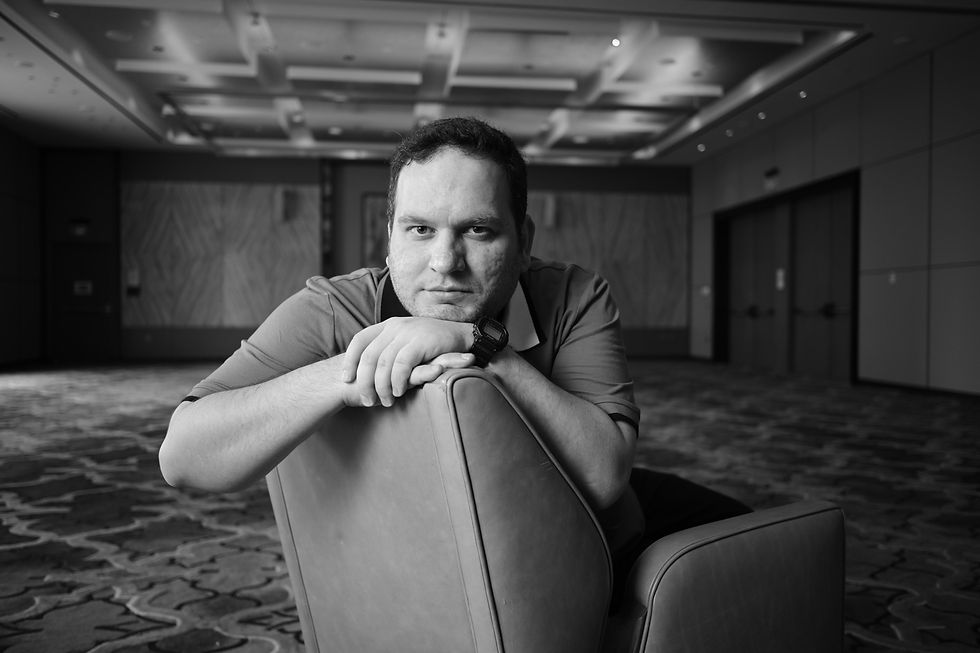
Iraqi filmmaker Hasan Hadi has made history with The President’s Cake, his Caméra d’Or-winning debut and Iraq’s first-ever prize at Cannes. The film explores the loss of innocence and the enduring hope of a child coming of age under a dictatorship, drawing from Hasan Hadi’s own childhood under Saddam’s regime. Hasan Hadi crafts intimate, unflinching stories that examine human resilience in the face of political and social upheaval. In this interview, he discusses the challenges and responsibilities of making a debut feature, the ethical and emotional complexities of telling a story through a child’s eyes, and the exhilaration of seeing his work embraced on the international stage at one of the world’s most prestigious film festivals.
The President’s Cake made a strong impression within the Caméra d’Or selection, which highlights bold first-time filmmakers. As the winning film, what inspired you to tell the story of a young girl facing such a complex and politically charged task in 1990s Iraq, and what messages did you aim to bring forward through your work?
The film was inspired by my childhood memories of growing up in Iraq during Saddam’s regime. As a filmmaker, I try to think about my characters, their feelings, their stories, and their journey rather than the messages implied in the film. I was intrigued by the idea of telling this story from Lamia's perspective because children, unlike adults, are unbiased and see the world as it is, without filters.
Growing up in wars and difficult socio-eco-political crises, I know firsthand that women and children are the first ones to pay the highest price during crises. Iraqi women and children suddenly found themselves burdened with the responsibilities of raising and providing for their families, as the men were either fighting on war fronts or trapped in prisons for political charges. For example, I remember my mother and her struggle to protect us and take care of us in times when my father was absent, and survival was the ultimate goal. Even in the film, we never see Lamia’s father, and we never know what happened to him. Although I know why he’s absent, it gives the audience the freedom to fill in the blank of why a man from the marshes in the 1990s has vanished from a little girl’s life.
In my work, I try to avoid making statements and messages. I find them to hollow the art from its meaning. Art is an expression rather than a message. I aim to raise questions rather than give responses or state messages. And the film's political elements are merely a leftover from depicting life under a dictatorship.
With The President’s Cake receiving international recognition, how do you envision the trajectory of your career moving forward, and what kinds of stories are you excited to explore next?
It’s an incredible honour to receive this award and bring Iraq’s first Cannes prize ever. However, with such honour comes great responsibility. Now, everyone has a higher bar and expectations, and I’m currently trying to block out external pressure and focus on my next steps and how I can push my limits as an artist. I hope this film and award pave the path for other filmmakers and artists from Iraq.
As for my career, I don’t know what the trajectory is. In fact, I don’t want to think about it. Careers can be deceptive. They have ups and downs, and perceptions of them can change over time. Instead, I try to focus on the trajectory of my work and how, with each work, I can grow, challenge myself creatively, and present something fresh and unique. I’m interested in stories that show human complexity and how it’s shaped and transformed under different circumstances. I often find myself drawn to films and stories that give us a peek into the human soul and its desires, and I aim to explore this aspect further in my future projects.
Having experienced the festival from the filmmaker’s side, how did the Cannes Film Festival shape your perception of the way debut films are embraced?
Making a film is very difficult, but making a feature debut feels almost like a miracle. And I believe the Cannes audience is aware of that. So, in a way, they cut some slack for debut features and their directors and won’t pass very definitive and harsh judgments. But they still hold the directors and the films to high standards. Eventually, whether the response is warm and positive or harsh and negative, you hope to learn something from it and implement it in future projects.
However, the atmosphere in Cannes is very contagious, and the love for films is in the air. You can feel that the love for cinema is still healthy and alive in Cannes. The audience there, and the exhilaration of discovering new films, new voices, and new artists, are what keep our faith in cinema alive.


Comments